ABYSS VANISH / DEVELOPMENT JOURNAL
Three Desktops: Each App in Its Own Window
UI rounds sixteen to eighteen: Lampblack, Meridian and Mantel, three desktops you can open in a browser, with three AI jurors’ scores.
The previous round made three apps. This one grew into a desktop: a menu bar, a task bar, windows and the small programs inside them. Three teams built for work, a shared family computer and a colour studio. By round eighteen, the problems reached beyond the picture: who gets the keys, whether typing follows a change of window, and how one missing character can erase a whole window frame. All three versions below can be opened directly.
From apps to a desktop
- Development
- Round sixteen made the first desktops. Round seventeen gave each app its own package. Round eighteen continued those desktops, fixing problems and removing workarounds the engine no longer needed.
- Difficulty
- The first desktops kept all their apps in one flow: the engine could not yet run a second package in a window.
- What changed
- app.open, app.frame, app.raise and app.send let each app keep its own flow, UI documents and database, while the desktop places and orders its windows.
- Still open
- These remain UI experiments with fictional data. They are not operating systems, and the communications and work data shown are not connected to external services.
Windows with apps of their own
- Development
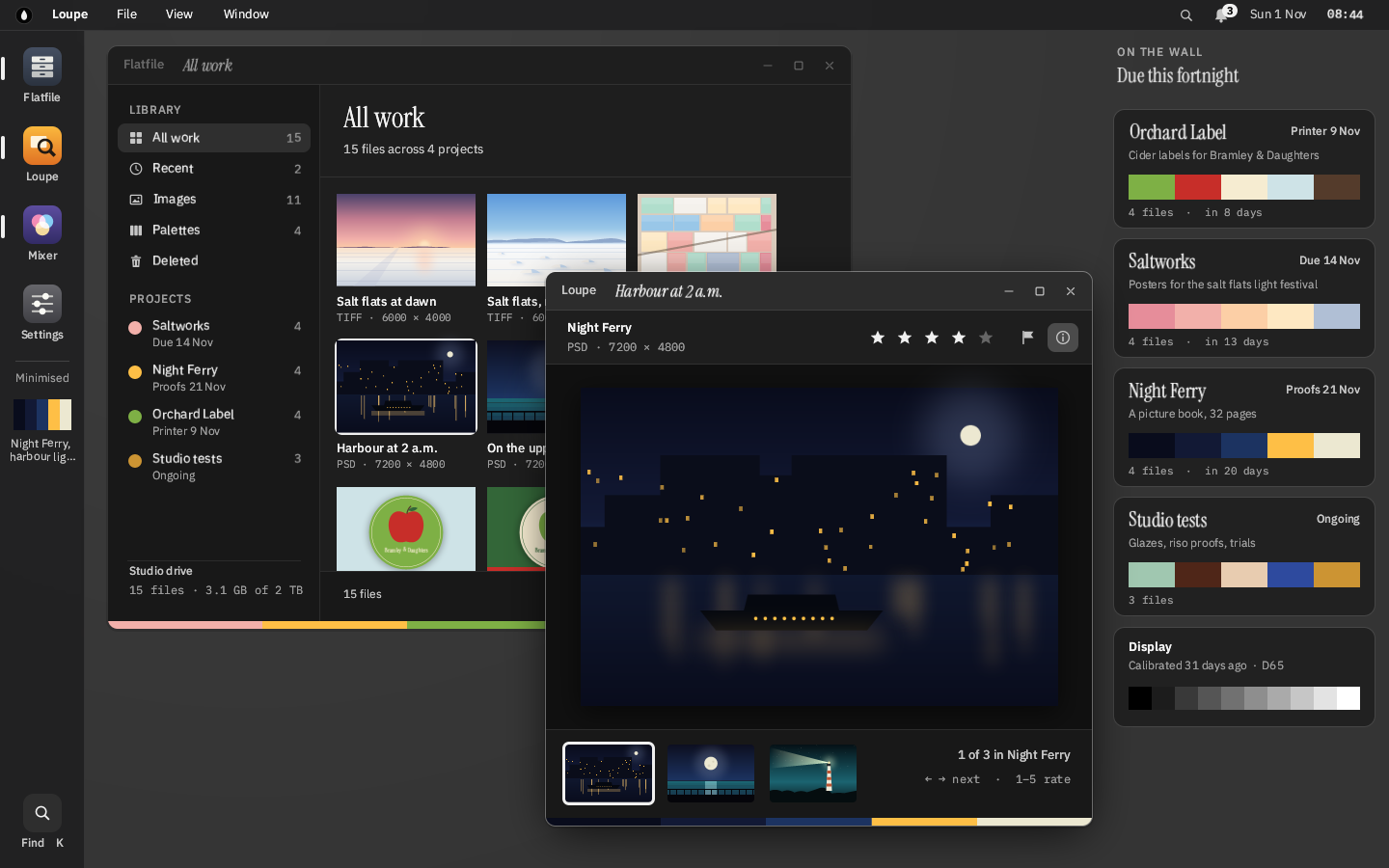
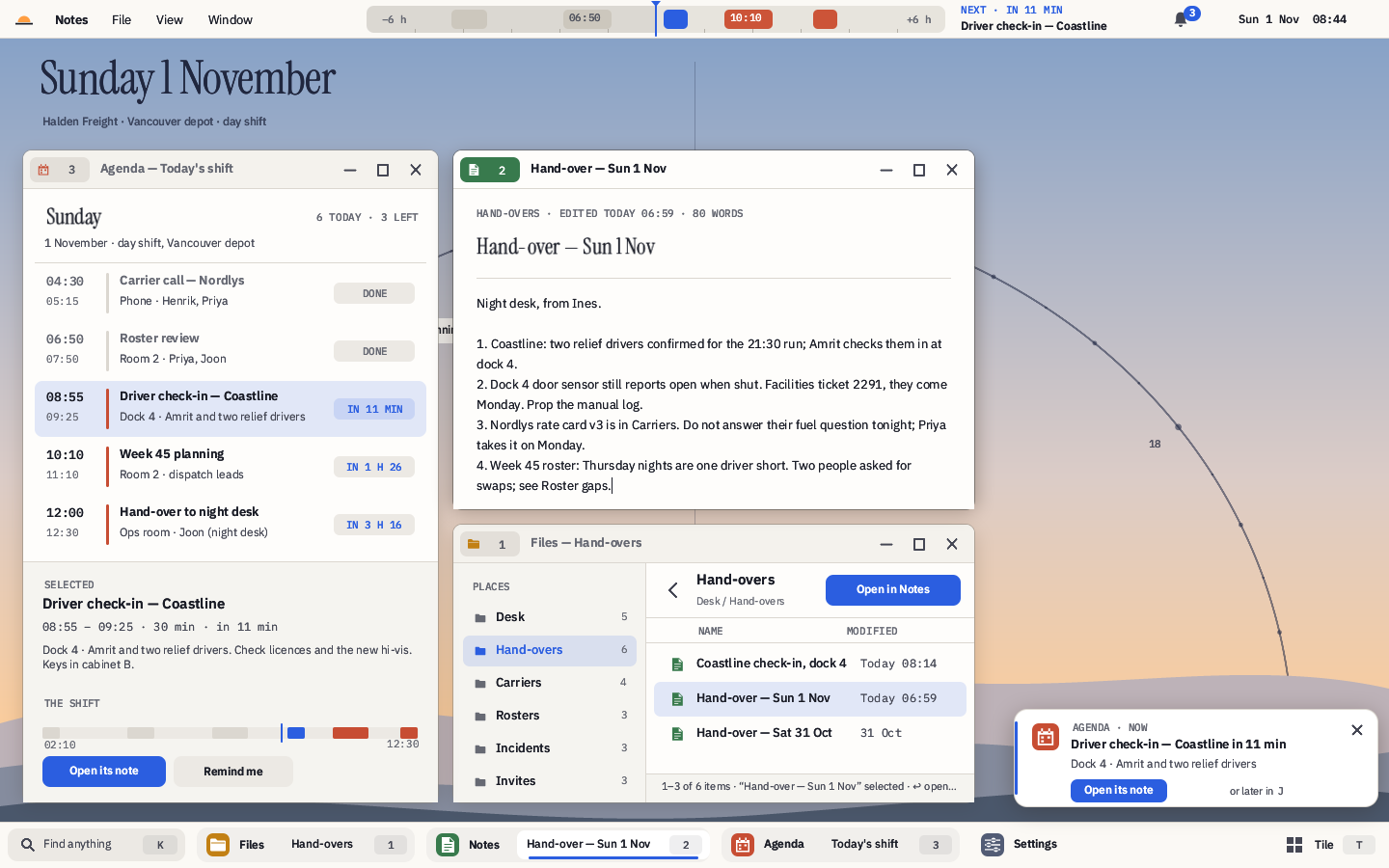
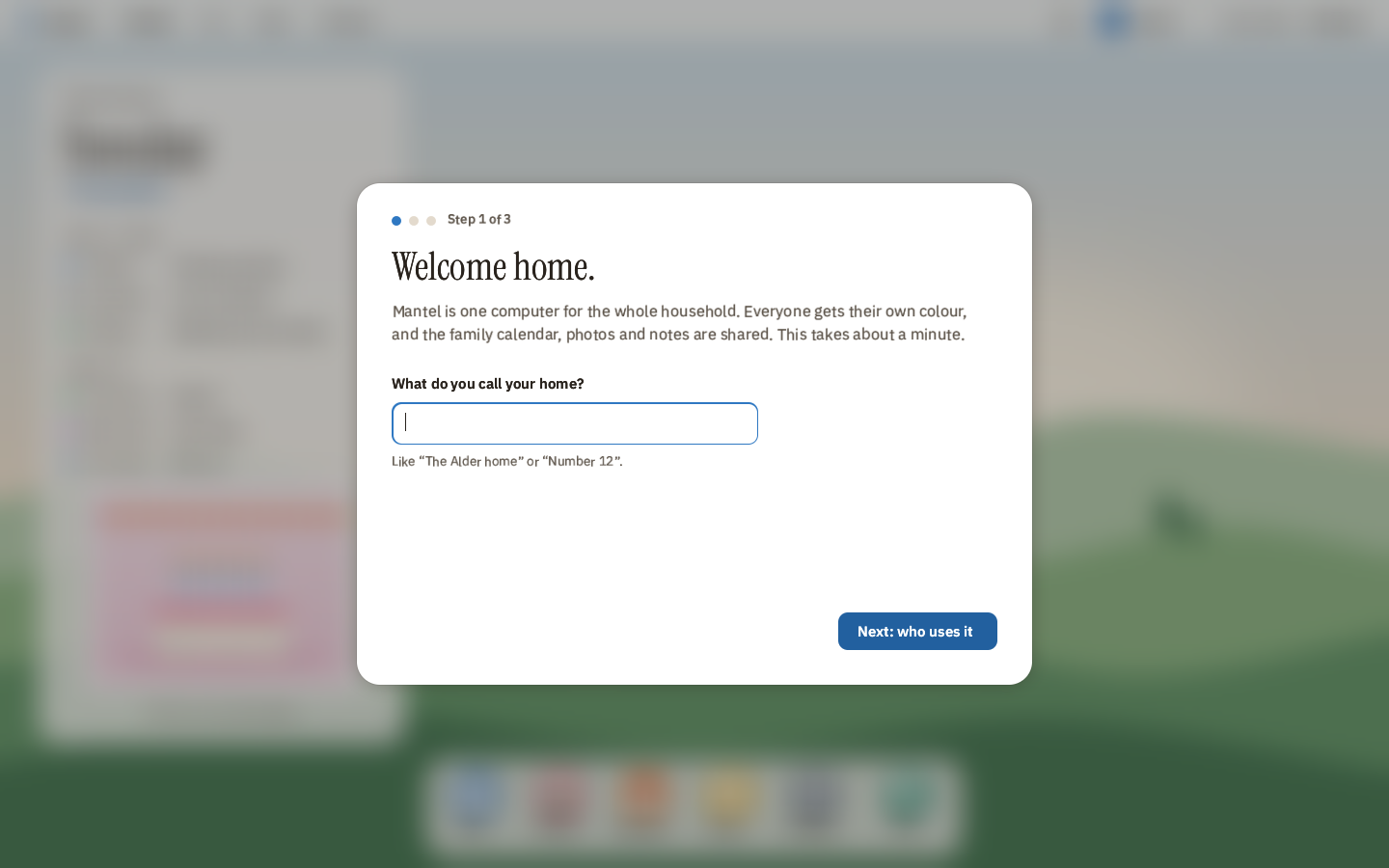
- Meridian is a dispatcher’s working desktop; Mantel is a shared family computer; Lampblack is a colour studio whose neutral interface leaves colour to the work. Each canvas is 1440 × 900.
- Difficulty
- Once windows draw, keys, typing, the pointer, the wheel and focus must reach the right app. Transparent decoration must also leave presses alone.
- What changed
- A press brings a window forward and gives it the keys. Apps hear focus, blur and pointer entry and exit. A ghost component is drawn but takes no presses.
- Still open
- A single-line field still wraps instead of scrolling horizontally to its caret; whole-document layout on each edit is also still a cost.
Three jurors, the same six moments
- Development
- Three independent AI jurors saw the same six moments of each desktop: desktop, launcher, menu, files, another appearance and notifications. Each calculated a weighted score: design 40%, usability 30%, creativity 20%, content 10%.
- Difficulty
- They saw still images rather than operating the apps. Their scores compare this set of images; they do not establish how the apps work in use.
- What changed
- Round eighteen’s means: Lampblack 7.83, Meridian 7.60, Mantel 7.45. Lampblack and Meridian improved from round seventeen; Mantel held at 7.45.
- Still open
- The jurors still identified inconsistent content, legibility in windows behind the front one, and finding an app among several windows.
| Desktop | R18 mean | Juror A | Juror B | Juror C | R17 mean |
|---|---|---|---|---|---|
| Lampblack | 7.83 | 8.00 | 7.65 | 7.85 | 7.25 |
| Meridian | 7.60 | 7.85 | 7.20 | 7.75 | 7.10 |
| Mantel | 7.45 | 7.35 | 7.40 | 7.60 | 7.45 |
Taking the desktops to the browser
- Development
- The same engine is compiled to WebAssembly and draws the desktops with WebGL 2. These web builds bind abyss-engine 986bd98838.
- Difficulty
- Meridian’s title used “⌘1”. With no web font containing ⌘, the whole window frame was refused on every frame.
- What changed
- A UI line now leaves a space for a character absent from every font and draws the rest. At the November 1 handoff, all 18 published files matched both Linux disk and the HTTP origin byte for byte.
- Still open
- The existing captures come from desktop Chromium at 1440 × 900. Phones, tablets and Firefox remain unverified. On November 1, headless Chromium also opened all three demos over public HTTPS: each returned 200, drew its first frame and raised no JavaScript exception.