ABYSS ENGINE / macOS UI RELEASE 2026.11.01.2
Handing the Engine Over: From a Desk Light to a Playable Desktop
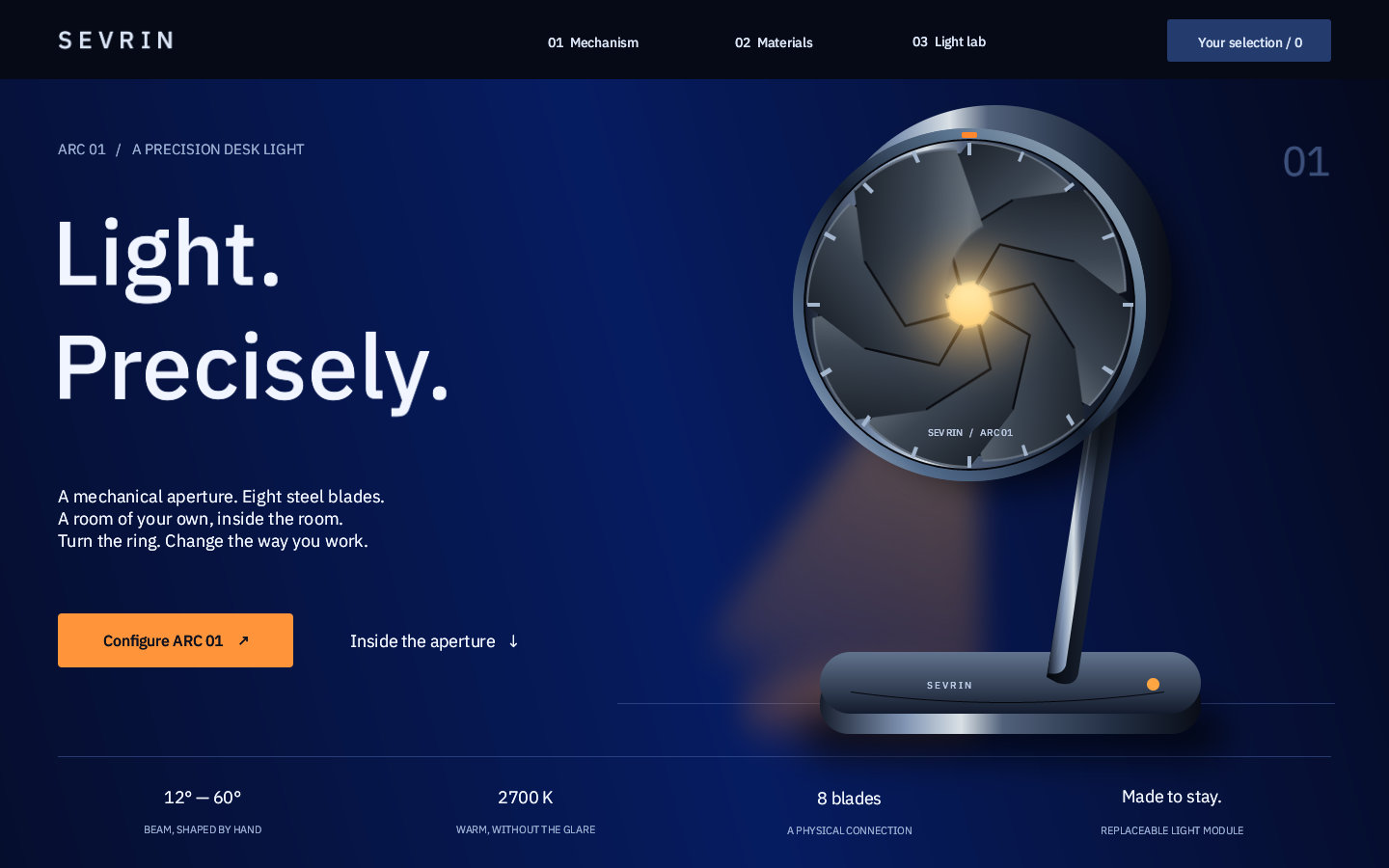
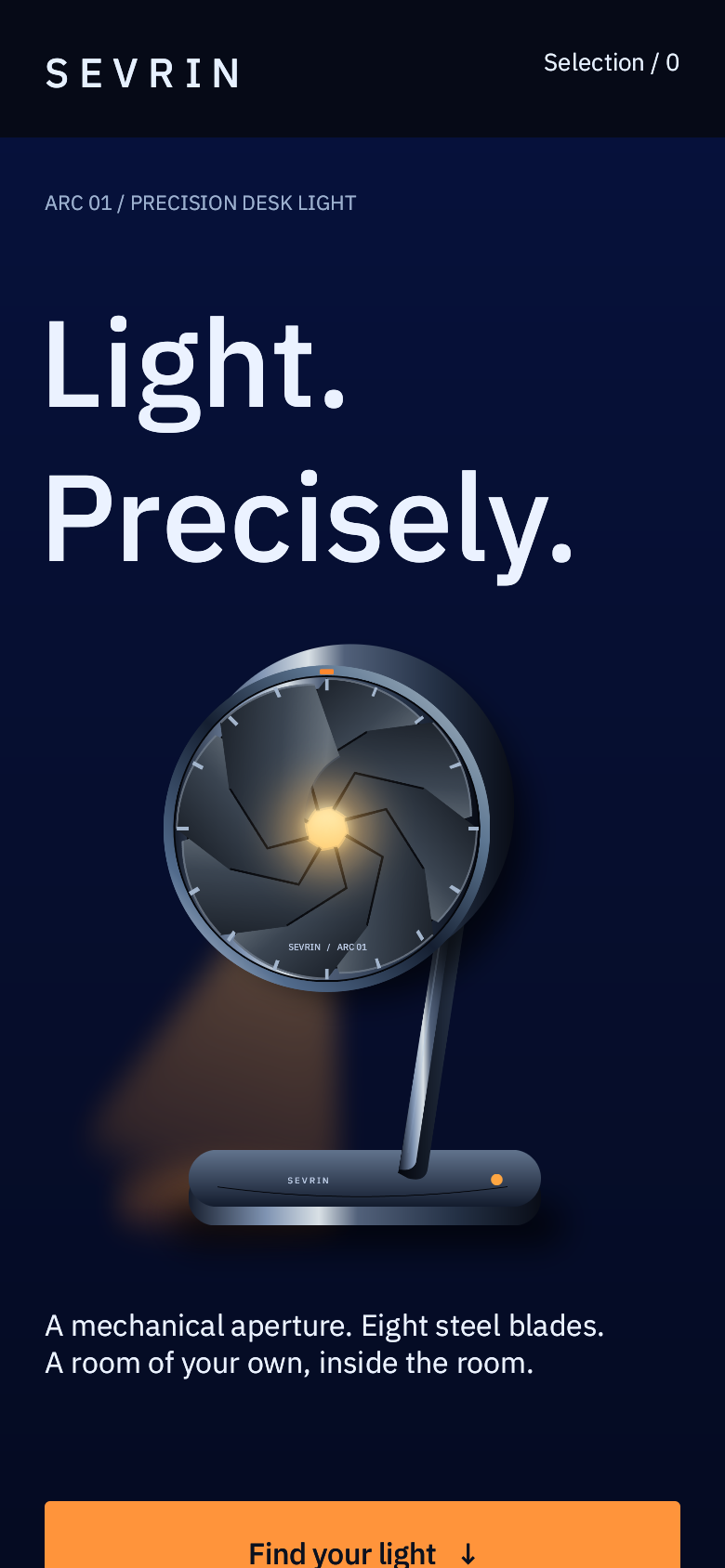
This time I wanted Abyss Engine to work outside its development checkout, as a downloadable macOS authoring kit. I found the first example too rough and asked the agent to remove it and start again, using Ostinato, Hachure, Hesper and Lisière as the minimum reference. The replacement is SEVRIN / ARC 01, a fictional desk light whose mechanical aperture changes the pool of light.
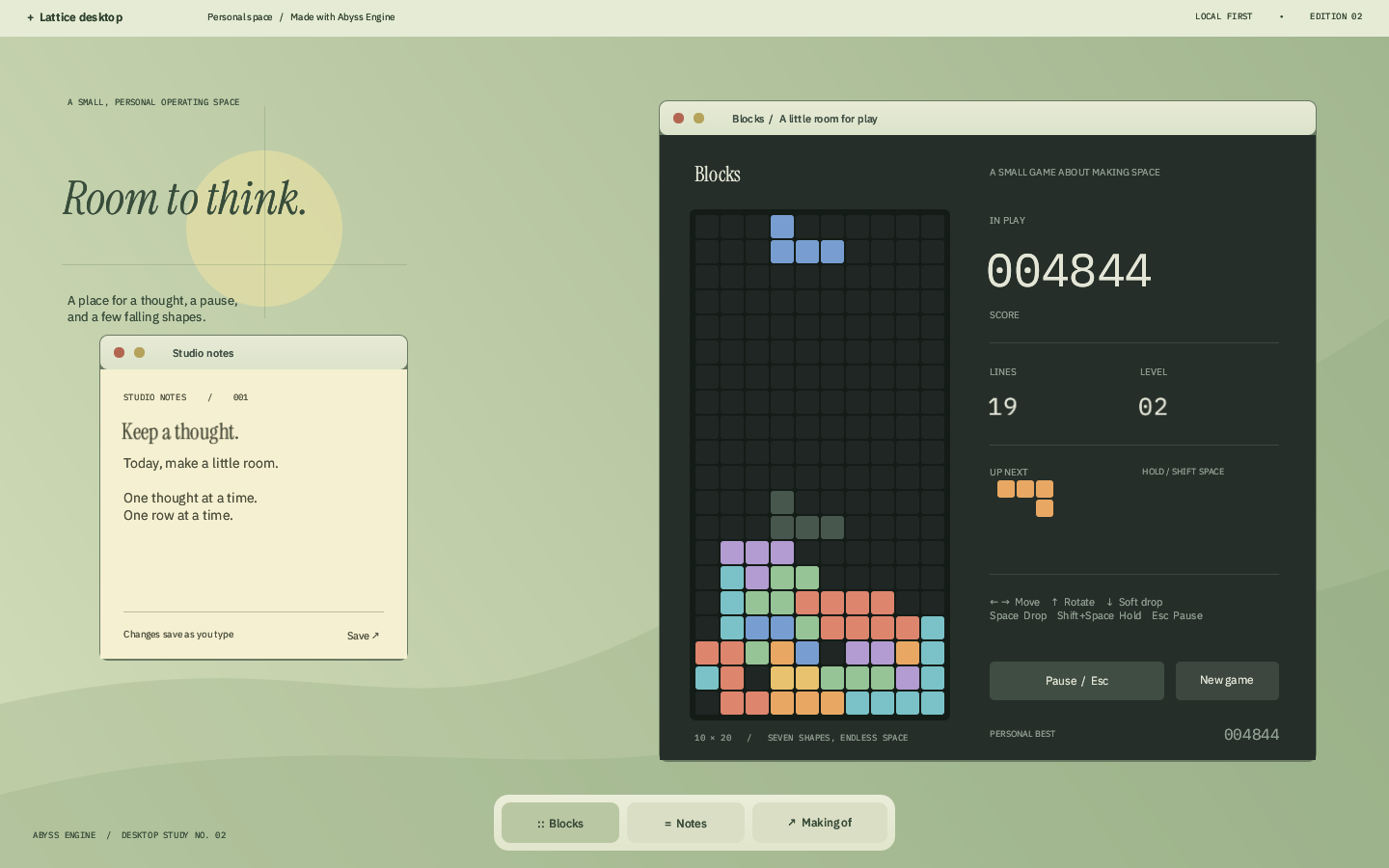
The second example is Lattice Desktop: playable falling blocks, editable notes, and an in-app ledger for model, effort, tokens and estimated API value.
Running is not the same as earning a place in a release
- Development
- One independent author used the kit’s MCP, compiler, documents, fonts and templates, without reading the original Engine checkout or borrowing its development services.
- Difficulty
- The first version rendered and responded, but its art and content were too simple. Passing a check did not establish that it belonged in a release.
- What changed
- I named the top four from the earlier article as the reference. The replacement had to be a complete product page whose hero, mechanism, materials, interaction and configuration described the same object.
- Still open
- This is a human quality requirement, not a new AI jury score. No aesthetic-review agents or external award jury were used.
Give the light material and structure
Authoring model and effort: the SEVRIN author used gpt-6.1-sol, reasoning effort high. Parent direction, visual revisions, packaging and native/browser verification used the same model and effort. Verified from this work’s actual Codex runtime metadata on 2026-11-01; this attributes the example and release work, not the entire engine.
- Development
- SEVRIN uses Plex sans-serif type, cobalt, ink and warm amber. Its housing, steel leaves, support, base, silver/brass samples and book are drawn through native engine UI documents.
- Difficulty
- The first lamp image had a hard-edged beam and stray base lines; later sections repeated the same front view. Spokes alone did not explain eight overlapping leaves.
- What changed
- Actual captures drove revisions to seams, illumination and occlusion. The material section became two machined samples with bores, bevels, grooves and shadows; the lab gained its own desk and book scene.
- Still open
- This is fictional industrial design and illustrative graphics. Angles, temperature, weight and material copy are not claims about a real product or measured optics.
Change the object, and keep the person’s choice
- Development
- Drag the aperture from 12° to 60°: the leaves, beam and illuminated area on the book change together. Choose silver or brass, select Focus/Read/Ambient and save a configuration snapshot.
- Difficulty
- Background demonstration must not overwrite a saved snapshot. Closing the panel must release scrolling, and a simulated native key is not proof of browser keyboard support.
- What changed
- Opening the panel stops the demonstration. Saved finish and angle are separate from current settings. Native state assertions were followed by actual browser dragging, save/clear, Home/End, demonstration and manual stop.
- Still open
- Selections last for the current page session; there is no checkout or real order. General canvas text has limited semantics, and number-key shortcuts are not claimed as supported Web controls.
Abyss Engine is the download; the work is its first example
- Development
- The macOS kit includes native and WebAssembly runtimes, MCP, compiler, fonts, templates, documents and editable example source. Engine and example have separate ZIPs and SHA-256 hashes.
- Difficulty
- It cannot depend on my development checkout. Documents named by MCP must actually be in the download, and internal acceptance records and local client paths do not belong in the public archive.
- What changed
- The archive was extracted to a path containing spaces, with the original tree, Homebrew and Emscripten denied. MCP, compilation, 14 documents at 1x/2x, native rendering and Web export ran before HTTP download verification.
- Still open
- This is an Apple Silicon UI authoring profile requiring Python 3.9+, not a complete game SDK or visual-editor app. Native binaries are ad-hoc signed, not notarized. macOS 12 is the deployment target; macOS 27.2 was the tested host.
Download Abyss Engine · 11.9 MB
The second example is a desktop you can play
- Development
- I asked the agent for a second example: a desktop app with a playable Tetris-style falling-block game inside it. Lattice Desktop gives Blocks, Studio notes and Making of their own app packages. The desktop owns its windows, dock and chrome; UI JSON and .abyss contain the interface and game rules.
- Difficulty
- A board on screen did not prove browser keyboard play. Tab belonged to browser navigation; two keys before the next frame could overwrite one another. Shapes also needed to stop falling when another app took focus.
- Change of course
- Hold became Shift+Space, input gained a queue, and switching or minimising an app pauses play. A real native keyboard run placed 60 pieces; the whole board matched an independent calculation: 19 lines, 4,844 points, level 2. Actual Chromium checks then covered 1440×900 and 1280×800.
- Still open
- This is a small desktop example. The macOS app keeps notes and personal best; the current falling stack is not restored after quitting. The Web preview keeps only its current app session. Phones, physical touch and Safari remain unverified.
Arrow keys move; Up rotates; Space drops; Shift+Space holds; Escape pauses; Enter resumes. Drag a title bar to move a window and use the dock to reopen apps.
Play in the browser Download macOS app + source + Web · 3.9 MB
Double-click the native app; it needs no Python. The local Web preview helper needs Python 3.9+. Example 02 is a separate download using the same runtime as authoring kit 2026.11.01.2; the published first-example archives remain unchanged.
Putting the authoring cost inside the work
- Development
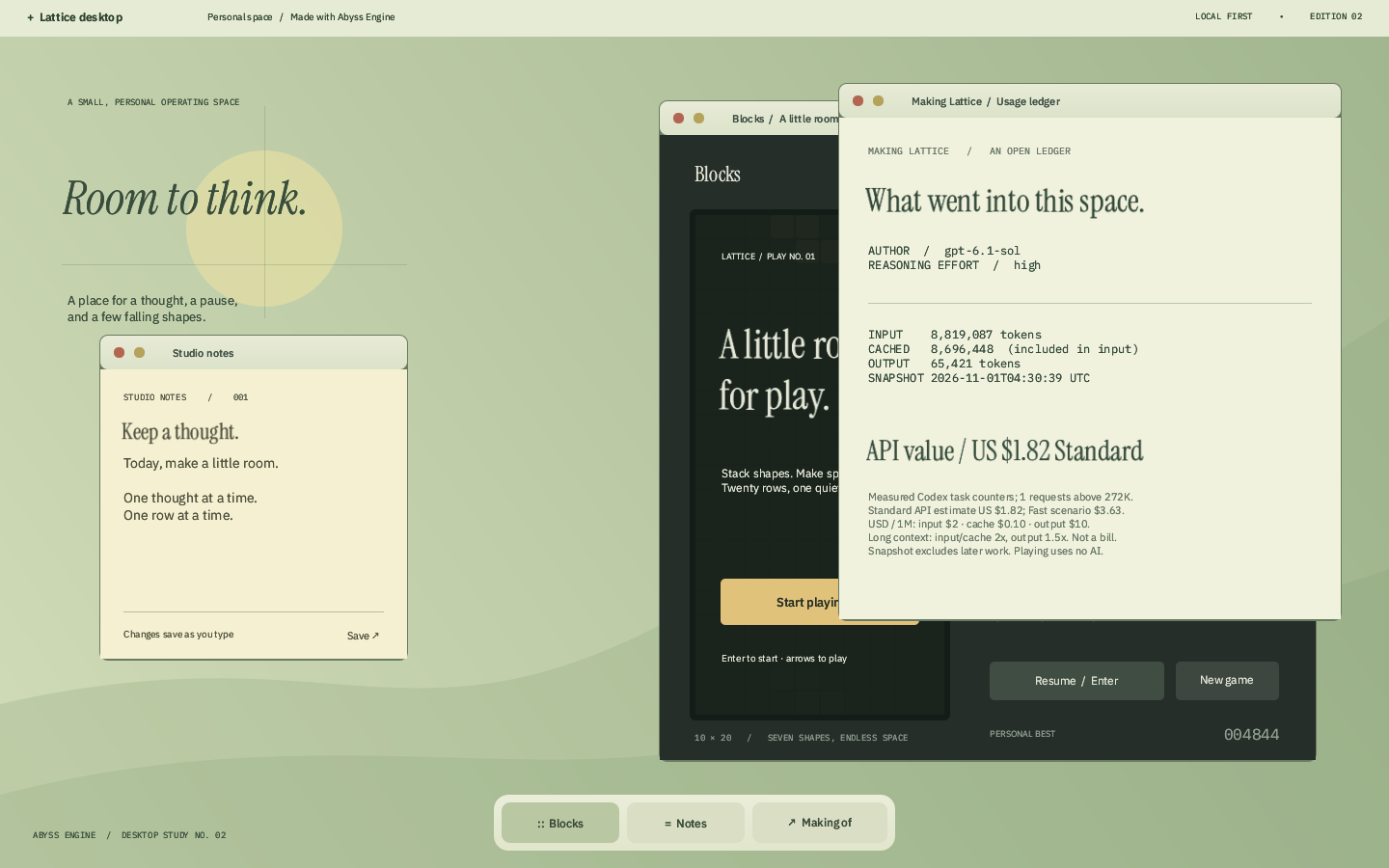
- I also asked for usage accounting. One Codex agent authored and verified example 02 with
gpt-6.1-soland reasoning efforthigh. The Making of window displays the same receipt. - Difficulty
- A long conversation resends context; the last reply’s length is not token usage. Cached input is already part of input, and reasoning tokens are already part of output. Neither should be counted twice.
- Change of course
- The export contains usage counters, no conversation or private reasoning. At the 2026-11-01 04:30:39 UTC cutoff: 8,819,087 input, including 8,696,448 cached; 65,421 output; 8,884,508 total tokens. Applying official prices per request gives about US$1.82 Standard API equivalent, or US$3.63 in the Fast scenario.
- Still open
- This is a timestamped authoring snapshot. Repackaging and journal publication after the cutoff are excluded. API equivalent is not a subscription conversion or an invoice; tool fees, taxes and regional premiums are excluded. Playing the game makes no AI calls.
Usage and estimate summary · SHA-256 · Official model pricing